Strengthen Your Child’s Math and Cognitive Skills With Smart Learning Programs
Children learn best when education goes beyond memorizing answers and encourages them to understand concepts, think independently, and solve problems confidently. Mathematics is one of the most important subjects for developing these abilities because it teaches children how to recognize patterns, work with numbers, analyze information, and find practical solutions. For parents seeking effective Math Classes in Dwarka, structured learning programs can provide additional support and help children develop stronger mathematical foundations.
Along with mathematics, activities such as abacus learning, handwriting improvement, and reasoning exercises can contribute to a child’s overall academic development. These programs can make learning more interactive while encouraging concentration, accuracy, creativity, and logical thinking.
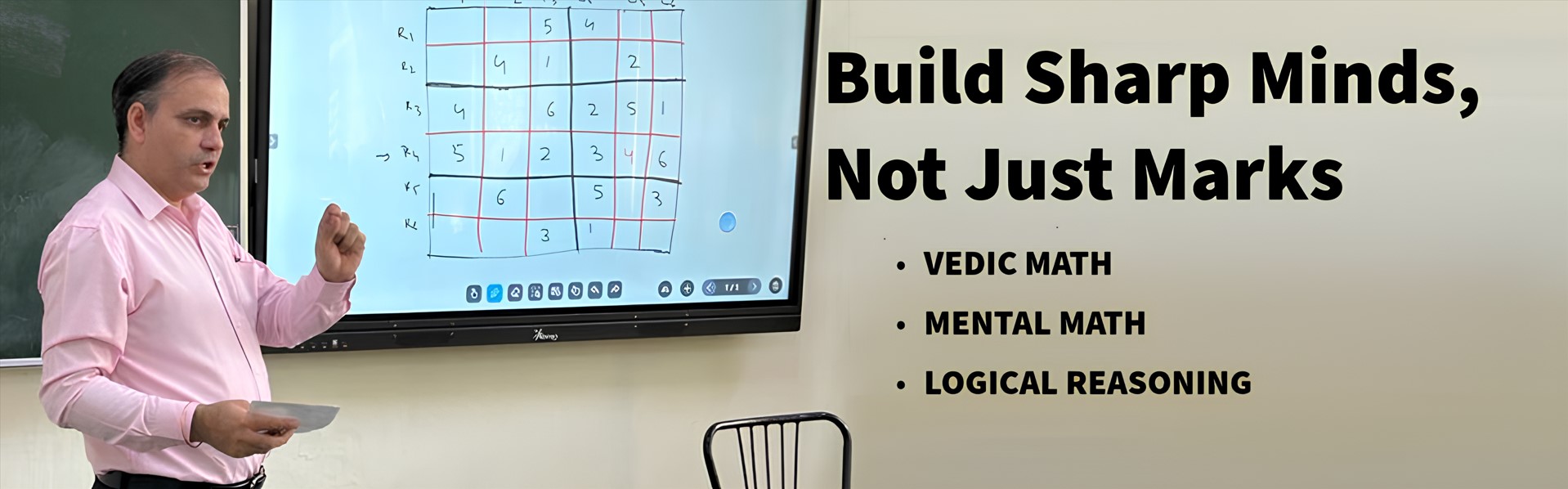
Building a Strong Foundation Through Math Classes
A strong understanding of basic mathematics can make future academic learning easier. Children first learn simple concepts such as counting and number recognition before moving toward addition, subtraction, multiplication, division, fractions, geometry, and more advanced mathematical topics.
However, every child learns at a different pace. Some students may understand a concept immediately, while others need additional examples and practice. Math Classes in Dwarka can provide a structured environment where children receive focused instruction and regular opportunities to practice.
Instead of simply asking students to memorize formulas, effective mathematics teaching can encourage them to understand how and why a particular method works. This approach can help children become more comfortable with challenging questions and gradually improve their confidence.
Making Numbers Interesting With Abacus Learning
Abacus education can introduce children to numbers through a practical and visual learning method. Students use an abacus to represent numbers and perform calculations, gradually becoming familiar with numerical relationships.
Parents searching for Abacus Classes near me may consider programs that combine calculation practice with activities designed to improve concentration and accuracy. Regular exercises can help children become more comfortable working with numbers and performing basic arithmetic.
Abacus training can also make mathematical practice more engaging for younger learners. Through repeated activities, children can develop familiarity with calculations while learning to focus carefully on each step.
The objective should not simply be calculation speed. Accuracy, understanding, and consistent practice are equally important parts of the learning process.
Improving Written Presentation Through Handwriting Classes
Academic success involves more than understanding answers. Children also need to communicate their answers clearly on paper. Handwriting is therefore an important skill during the school years.
Parents searching for Handwriting classes near me can explore programs that focus on letter formation, spacing, alignment, pencil control, writing posture, and overall neatness. Regular guided practice can help children establish better writing habits.
Improved handwriting can make schoolwork easier to read and more organized. It can also help children feel more comfortable while completing written assignments and examinations.
Handwriting development should be approached patiently. Children may need repeated practice before new writing habits become natural. Encouragement and consistent guidance can make this process more positive.
Developing Problem-Solving Skills Through Reasoning
Reasoning is an essential part of learning because children frequently need to compare information, recognize patterns, identify relationships, and determine appropriate solutions.
Reasoning online classes can provide students with additional opportunities to practice these skills from home. Online sessions can be useful for families looking for flexible learning options alongside regular school schedules.
Reasoning activities can include number sequences, patterns, classifications, analogies, puzzles, coding-decoding exercises, and visual problems. These activities encourage children to observe information carefully and approach questions logically.
With regular practice, students can become more comfortable handling unfamiliar problems instead of relying only on memorized methods.
Encouraging Logical Reasoning for Kids
Logical reasoning for kids should be introduced through activities that match their age and learning level. Young children can develop reasoning abilities through puzzles, matching exercises, sorting games, patterns, and simple challenges.
For example, a child might be given a sequence of shapes and asked to identify the next shape. Another activity might ask the child to identify which object does not belong to a particular group.
These simple exercises encourage observation and decision-making. As children progress, they can be introduced to more complex problems that require multiple steps of reasoning.
The purpose of logical reasoning is to help children understand relationships between different pieces of information and reach conclusions based on those relationships.
Exploring a Math Excellence Program
A Math Excellence Program can provide children with additional mathematical enrichment beyond their regular school curriculum. Such a program may combine fundamental concepts with advanced exercises, mental mathematics, puzzles, reasoning, and problem-solving activities.
Students can gradually move from simple questions to more challenging problems as their understanding improves. This progression can help prevent children from feeling overwhelmed while still giving them opportunities to develop their abilities.
A good mathematics enrichment program can focus on conceptual clarity rather than simply increasing the number of questions a child completes. When children understand the reasoning behind mathematical methods, they are better prepared to apply those methods to different situations.
Benefits of Combining Different Learning Activities
Mathematics, abacus, handwriting, and reasoning may involve different types of activities, but they can complement each other.
Math develops numerical understanding. Abacus activities provide calculation practice. Handwriting supports clear written communication, while reasoning exercises encourage analytical and logical thinking.
When children participate in different skill-building activities, they can experience a more balanced approach to learning. Instead of focusing only on academic marks, parents can encourage the development of skills that support long-term learning.
For example, a child solving a mathematical problem may need to understand the question, identify the relevant information, calculate the answer, and write the solution clearly. This process can involve mathematics, reasoning, concentration, and handwriting skills at the same time.
Making Learning More Engaging
Children are naturally curious, but repetitive learning can sometimes reduce their interest. Interactive activities can make educational practice more enjoyable and encourage children to participate actively.
Puzzles, mental calculations, reasoning challenges, number games, writing exercises, and practical examples can provide variety during learning sessions.
Teachers can also encourage children to explain how they reached an answer. This allows students to practice not only solving problems but also communicating their thought process.
A supportive classroom environment can make it easier for children to ask questions and learn from mistakes. Mistakes can become useful learning opportunities when teachers explain the underlying concept instead of simply providing the correct answer.
Supporting Different Learning Levels
Not every child requires the same type or amount of academic support. Some students may need help with basic concepts, while others may be ready for advanced challenges.
Programs offering Math Classes in Dwarka can be particularly useful when learning activities are adapted to the student's current level. Children can practice foundational topics before moving toward more challenging questions.
Similarly, abacus and reasoning activities can be adjusted according to age and ability. A progressive learning approach allows students to build confidence gradually rather than being exposed to problems that are too difficult too soon.
How Parents Can Support Learning at Home
Parents can reinforce classroom learning through simple activities at home. Children can practice mental calculations during everyday activities, identify patterns around them, solve age-appropriate puzzles, or spend a few minutes practicing handwriting.
Consistency is more important than lengthy study sessions. A short daily practice routine can help children retain concepts and develop regular learning habits.
Parents can also encourage children to explain their answers. Asking questions such as “How did you solve this?” or “Why do you think this is the correct answer?” can encourage children to think more deeply.
Choosing the Right Educational Program
Before selecting a learning program, parents should consider the child's age, current academic level, learning objectives, schedule, and preferred learning style.
For Abacus Classes near me, parents can look for programs that balance calculation practice with accuracy and understanding. For Handwriting classes near me, attention should be given to writing technique and regular guided practice.
Families considering Reasoning online classes can evaluate whether the program provides interactive teaching and suitable practice exercises. For mathematics enrichment, a Math Excellence Program should ideally provide progressive learning and opportunities for students to apply concepts rather than relying entirely on repetition.
Conclusion
Children need more than textbook knowledge to become confident learners. Mathematical understanding, reasoning, handwriting, concentration, and problem-solving skills can all contribute to their academic development.
Well-structured Math Classes in Dwarka can help students strengthen mathematical concepts and approach challenging questions with greater confidence. Abacus learning can provide additional calculation practice, while Handwriting classes near me can help children develop clearer and more organized writing habits.
At the same time, Reasoning online classes and activities focused on logical reasoning for kids can encourage observation, analysis, and independent thinking. A structured Math Excellence Program can bring these learning principles together by providing children with opportunities to practice mathematics at an appropriate level.
With regular practice, patient guidance, and a supportive learning environment, children can gradually build stronger academic foundations and develop skills that remain valuable throughout their education.

Comments
Post a Comment